
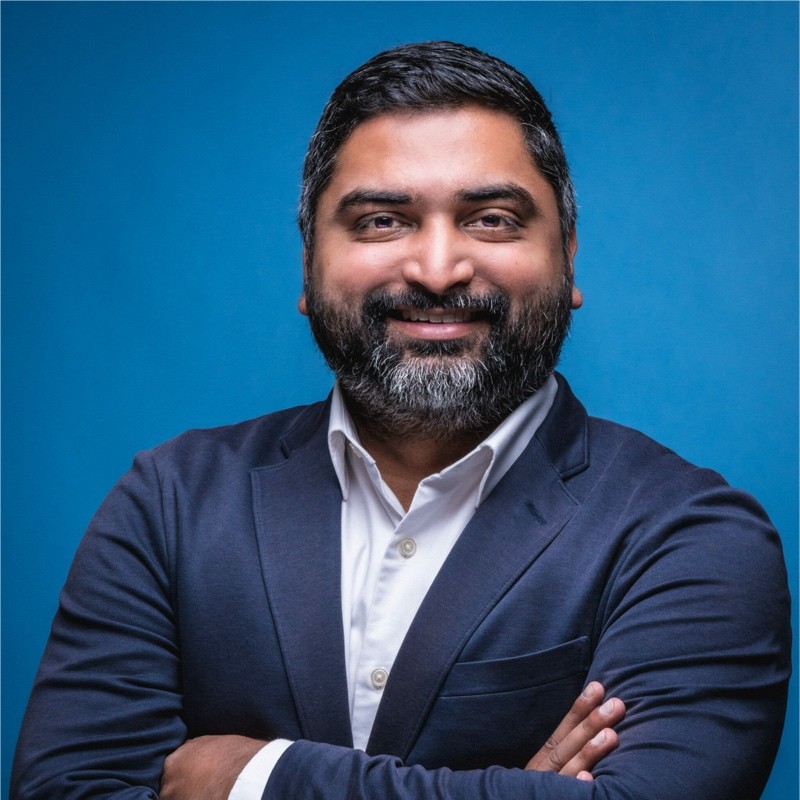
Abin Kuriakose - Chief Strategy & Innovation Officer at World Business Chicago
Chicago isn’t a single industry city, and that’s its advantage.
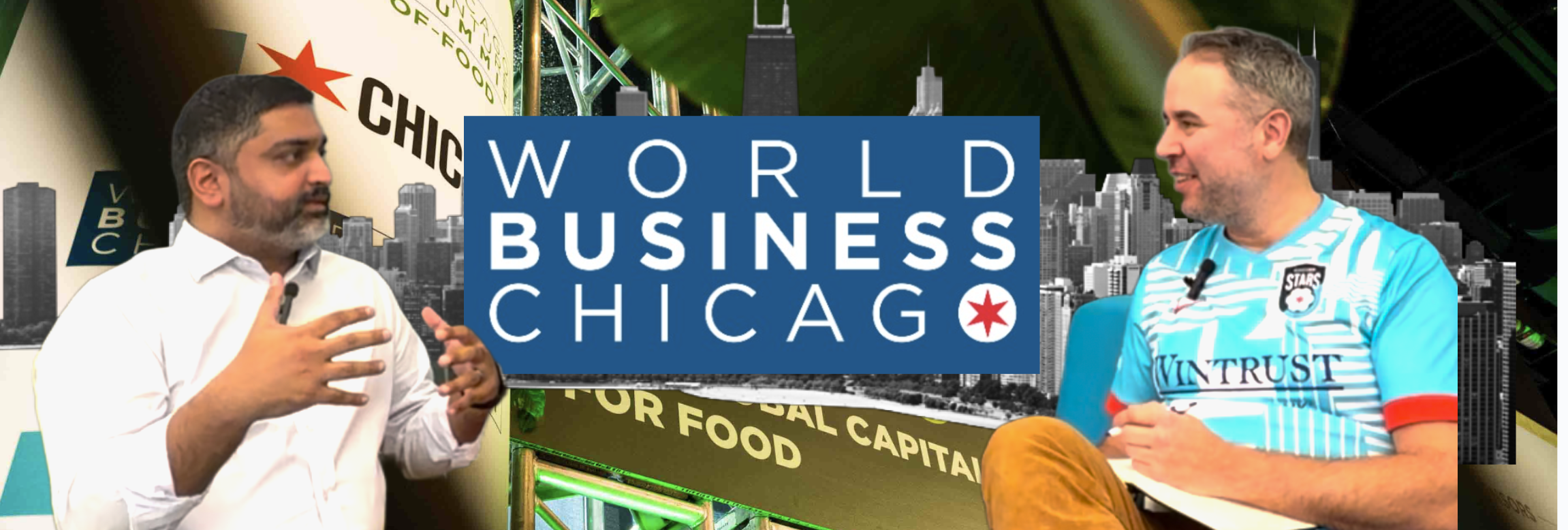
In this episode of Ted Listens, Ted Novak sits down with Abin Kuriakose, Chief Strategy & Innovation Officer at World Business Chicago, to unpack how Chicago really works as a place to build and scale a business.
From why global companies are placing innovation hubs in Chicago, to how talent, climate resilience, and cross-industry collaboration are shaping the city’s future, this conversation offers a rare, behind-the-scenes look at economic development through the lens of entrepreneurs and operators.
If you’re a founder, investor, or business leader curious about where opportunity is quietly compounding, this episode illustrates why Chicago is strategic opportunity for businesses to thrive.
🎧 Topics include:
- Why Chicago’s industry diversity is a competitive advantage
- How startups gain access to enterprise decision-makers
- The role of talent, universities, and workforce development
- Climate resilience as a business strategy
- What founders often underestimate about building in the Midwest


“Strong ecosystems aren’t explained. They’re experienced.”
Watch Now
Transcript
Transcript
Edited for clarity
Ted Novak:
As I’ve done more of these episodes, I realized doing them all in the same spot wasn’t working—the visuals weren’t great. So I started recording at people’s places. Sometimes that’s amazing, sometimes it’s unpredictable, but it helps ground where we are. I’ve learned a few tricks along the way.
My intent with the podcast is simple. I’m a musician, so it’s cool to be on Spotify. I’m also an old-school business owner—it’s cool to have an office. I spend time making sure the audio sounds right, and then I use video clips for promotion. The full videos exist, but the short clips are what build momentum.
Alright—thanks for being here today, Abin. I’m excited for this conversation.
I think our worlds first collided through the Chicago ecosystem, especially around the Chicago Venture Summit. What’s unique about having you here is that you’re not just a business in the economy—your work is the economy.
When I first heard the name World Business Chicago back around 2009 or 2010, I remember thinking, What does that even mean? It sounded grand. Over time, I came to really respect the organization and the work you do. So let’s start there. What is World Business Chicago focused on?
Abin Kuriakose:
World Business Chicago is the city’s economic development organization, chaired by the mayor. We’re a 501(c)(3) nonprofit structured as a public-private partnership. While the mayor chairs the board, we also have more than 100 of Chicago’s largest and most important companies represented—Northern Trust, Bank of America, JP Morgan, Amazon, Google, Ferrero, Kraft Heinz, and many others.
Our work centers around three core priorities: helping companies make their next major investment in Chicago, supporting our hometown business and innovation ecosystem, and building Chicago’s business brand.
Most global cities have a similar organization—London & Partners, Paris & Co, the Greater Houston Partnership. What’s critical is having an independent economic development organization that’s deeply embedded in the business community while still working closely with city leadership.
Ted:
That context is really helpful. There are a lot of organizations that are “pro-Chicago.” How does World Business Chicago differentiate and collaborate with them?
Abin:
We work closely with many organizations, but everyone has a defined lane. We report to the mayor and the deputy mayor of economic development. That cabinet includes groups like Choose Chicago, which focuses on tourism and conventions, and the Chicago Housing Authority, which focuses on housing development.
On the business side, you have organizations like the Chicagoland Chamber of Commerce and the Commercial Club of Chicago. World Business Chicago’s lane is very clear: economic development. Our theory of change is simple—the more companies that move here and grow here, the more jobs and opportunity for Chicagoans.
Ted:
Chicago’s diversity comes up a lot. No single industry makes up more than about 13% of the economy. That creates both opportunity and complexity. How do you frame the “why Chicago” conversation today?
Abin:
Chicago is the most economically diverse city in the United States. That’s a huge opportunity for cross-sector collaboration—life sciences intersecting with food, logistics intersecting with climate, and so on. The challenge is branding something that doesn’t fit neatly into one category.
Since the pandemic, we’ve leaned into that diversity as a strength. We’ve also adapted to a changing economy. Instead of chasing headquarters, we focus on helping companies place key business units here—innovation, R&D, operations—where they benefit from talent and ecosystem access.
You see that with companies like Uber Freight, Ferrero, and Mars Wrigley. These decisions are driven by access to talent, infrastructure, and long-term sustainability.
Ted:
You also talk a lot about climate resilience.
Abin:
Absolutely. In the AI and data-driven economy, companies need access to electricity and water. Chicago’s proximity to Lake Michigan and affordable power make it increasingly attractive. Climate resilience is now part of site-selection strategy.
Companies making nine-figure investments are asking long-term questions about sustainability, livability, and risk. Chicago checks many of those boxes.
Ted:
One thing I respect about your approach is that you’re not simplifying the pitch.
Abin:
We don’t rely on one-line narratives like “no state income tax.” People don’t wake up thinking about that. They care about talent, customers, culture, affordability, and long-term growth. Our job is to show how those building blocks come together in Chicago.
Ted:
You also spend a lot of time with entrepreneurs directly.
Abin:
Everything we do has to benefit the entrepreneur. We spend a lot of time in one-on-one conversations, trying to understand reality and help founders get to their next milestone.
Sometimes that’s helping someone get into a conference they don’t know how to access. Sometimes it’s making the right introduction—not the biggest one.
The challenge is balancing accessibility with readiness. Not everyone is prepared. But the founders who inspire me most are the ones told they need to leave Chicago—and choose to stay anyway because they know the business can thrive here.
Ted:
The Chicago Venture Summit has become a huge part of that ecosystem.
Abin:
It started in 2014 as a call to Silicon Valley investors to come see what was being built in Chicago. Today, it’s the city’s flagship venture and startup conference. Entrepreneurs attend for free—that’s intentional. We want it to be inclusive.
We’ve evolved it into sector-specific summits—food, logistics, climate tech—bringing startups, corporates, and investors into the same room. That’s where real momentum happens.
Ted:
You’re also incredibly active on LinkedIn. People can’t miss you.
Abin:
That started out of frustration. In 2019, I was in too many meetings about branding campaigns. I decided instead to tell real stories—entrepreneurs, culture, civic life—directly on LinkedIn.
I focus on substance, not sales. I talk about why people are building what they’re building, why Chicago matters, and what’s actually happening. LinkedIn rewards authenticity and curiosity.
What’s been interesting is watching the audience shift—from mostly Chicago-based to increasingly national. Good Chicago stories resonate well beyond the city.
Ted:
What advice would you give to entrepreneurs thinking about building or expanding in Chicago?
Abin:
Three things stand out.
First, Chicago has an accessible and inclusive innovation ecosystem. Second, the collaboration here is real—you meet the right people quickly. Third, the city offers talent and customers at scale. For many companies, Chicago becomes the place where capital, customers, and culture intersect.
I always say: we just need to get people here. Once they experience the city and the ecosystem, it sells itself.
End of transcript


.png)


