

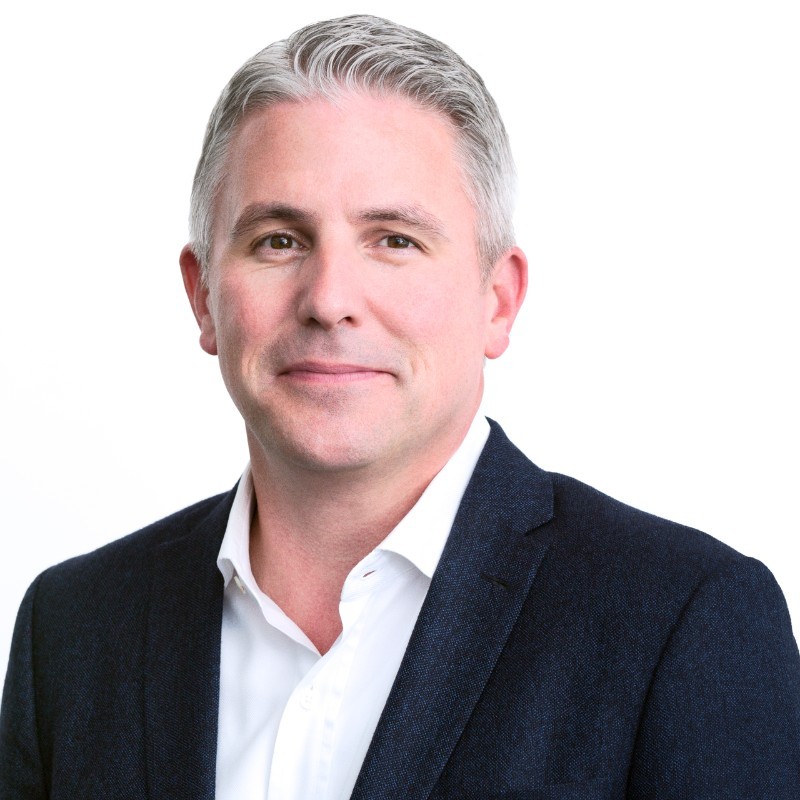
Kevin Willer - Partner at Chicago Ventures
Kevin Willer on Building Chicago's Startup Community, Venture Capital, and the Business of Sports
What happens when you put entrepreneurs, investors, mentors, universities, and talent in the same place? For Kevin Willer, former CEO of 1871 and partner at Chicago Ventures, those connections helped transform Chicago's startup community and continue to shape how he thinks about investing in businesses and communities.
In this episode of Ted Listens, Kevin and I start the conversation from when we first met in 2012 back when 1871 was taking shape. We look back at how Chicago's entrepreneurs, investors, corporations, and universities came together to build a stronger ecosystem, and what the city needs to keep that momentum going.
Kevin shares the evolution of Chicago Ventures, an early-stage investment firm whose portfolio includes SpotHero, G2, Cameo, and Project44. He explains why the firm focuses on founders with firsthand knowledge of the problems they want to solve, how it evaluates traction and market opportunities, and why helping founders beyond the check matters.
The conversation also explores Chicago's next chapter, from startup exits that recycle capital and talent back into the local economy to the opportunities around AI, quantum computing, and hard tech. Lastly we touch on Kevin's personal investments in professional soccer clubs in England, the United States, and Canada, along with the growth of live sports as both a business and a community asset.
Topics include:
- Why 1871 emerged at the right moment for Chicago's startup ecosystem
- How proximity, mentoring, and unexpected connections help companies grow
- The story behind Chicago Ventures and its early-stage investment approach
- What investors look for in founders, including “earned truths” and founder-market fit
- Why startup exits can help fuel the next generation of Chicago companies
- The promise of AI, quantum computing, and manufacturing innovation in Illinois
- Why Kevin personally invests in professional soccer clubs—and what owning a team has in common with backing a startup
- Why local sports teams matter as community assets and how Chicago can better showcase its strengths
Strong communities are not built by capital or physical space alone. They're built by connecting people, sharing experience, and creating the conditions for the next opportunity. I feel very strongly that Chicago continues to be an incredible community for building businesses, it was fun to re-live and learn insights I wasn't aware of on some of the history and efforts that went into it.
I hope you enjoy the conversation as much as we did.


"Get the entrepreneurs, the investors, the mentors, the universities, the talent, just all different types of people into a space and just good stuff will happen."
Watch Now
Transcript
Editor's note: This is an edited and condensed transcript based on the episode recording. Repetitions, interruptions, overlapping speech, and off-topic chatter have been removed, and some exchanges have been combined for readability. It is not a word-for-word transcription. Speaker labels reflect the identifiable flow of the conversation. Consult the video before using a passage as a verbatim quotation.
How Chicago's startup community came together
Ted Novak: Kevin, thanks for coming. We actually first met in 2012. I looked it up in my old emails. At the time, you had come from Google and were leading the Chicagoland Entrepreneurial Center. The idea for 1871 was coming together, and there was a lot of energy around what the future of Chicago business could look like. You've really been a community builder, although I know you might push back on that description. What did it take to get that community going?
Kevin Willer: I'd been at Google for a decade, gone to Booth, and gotten involved with angel investing, venture capital, and Chicago startups around 2008 to 2010. It was the era of Groupon, Grubhub, Clever, Fieldglass, and a number of companies that were suddenly putting Chicago on the map.
When Groupon turned down a potential acquisition by Google and decided to remain independent, people outside Chicago started asking what else was happening here. The funny part was that we didn't have a great answer. We knew there were interesting companies, but the community wasn't particularly organized. We didn't even know everything that was happening around us.
That's when people started being intentional about building an ecosystem. Built In Chicago emerged to document companies, founders, and funding. J.B. Pritzker saw an opportunity to create a place where the entrepreneurial community could come together and put resources behind the effort. He was truly the founder of 1871.
The period from about 2001 to 2011 felt like the wilderness for Chicago startups. People were building companies, but they often had limited support. The decade that followed was about creating the infrastructure: incubators, coworking spaces, venture funds, university connections, and corporate engagement. We learned from other cities and tried to figure out what Chicago needed most.
The central idea was density. Bring founders, investors, mentors, universities, and talent together, both physically and through a connected community, and good things can happen. Looking back, our timing was almost perfect. When 1871 opened in May 2012, the excitement and momentum were already there. We didn't know that at the time, of course.
Ted: I remember that energy. Clique was involved with 1871, and we mentored companies there. There were pitch events, people helping each other, and all these chance meetings that turned into something real. One of our interns at the time built a product with us called Pin2Sell, and had the opportunity to pitch it during one of his first weeks in Chicago. He eventually became our CTO and I'd like to think that experience had an impact on his decision to accept full time position with us.
I also remember mentoring a founder whose company let people pay celebrities for personal videos. I kept making suggestions, and he had already thought of all of them. I finally asked why he needed my help. He just wanted to know whether I thought it was a good idea. That company turned out to be Cameo.
Kevin: That's a great example. Chicago Ventures invested in Cameo in part because they were down the hall from us at 1871. One of our team members started talking to them and kept pushing us to take a closer look. Those are exactly the kinds of unexpected interactions we hoped would happen.
You can't manufacture every useful connection or over-engineer it. But you can put entrepreneurs, investors, mentors, universities, and other people in the same place and increase the odds that something great will happen. It's not just a bunch of people sharing an office. It's a community where people understand one another's challenges and want to help.
The next chapter for 1871
Ted: You were part of the earliest version of 1871, and it's continued to evolve. What do you make of its next chapter?
Kevin: I was the first generation, then Howard Tullman took over, and now Betsy Ziegler has led it through a very different environment, including COVID. Coworking and COVID weren't a natural fit, so that presented real challenges.
The organization has moved from the Merchandise Mart into a new home at 111 North Canal, in Edelman's space, alongside partners including Current and the Illinois Hispanic Chamber of Commerce. I'm still on the board and care deeply about its future.
What's important is that entrepreneurs today might need something different than they did in 2012. We shouldn't just recreate the original model because it worked at the time. The founders building companies now should tell us what support they need, and organizations like 1871 should respond and collaborate with others across the city.
We've also seen organizations such as mHUB and MATTER develop strong models for different industries. That is part of the ecosystem maturing.
From 1871 to Chicago Ventures
Ted: Let's talk about Chicago Ventures. How did you go from leading 1871 to investing in startups full-time?
Kevin: I had been angel investing with Stuart Larkins, whom I consider one of Chicago's strongest investors over the last couple of decades. Stuart came out of Performics, a digital marketing company with deep connections to Google's early search advertising business.
Chicago Ventures grew from an earlier investment effort and was backed by Chicago families and entrepreneurs who wanted to address the early-stage capital gap. Around 2011 and 2012, Chicago companies could sometimes raise later rounds from coastal venture firms, but raising the first institutional capital locally was harder. The firm was created to fill that gap.
Stuart was looking for a partner, and after a couple of years running 1871, it made sense for me to move into venture capital. Ironically, Chicago Ventures' office was in 1871. I left one job for another and went to the same office every morning.
We've now invested in more than 100 companies across four funds, including Chicago companies such as SpotHero, G2, Cameo, Project44, AeroPay, and NOCD, along with investments outside Chicago. I'm grateful for the entrepreneurs and the investors who've supported us over the years.
Ted: I didn't realize Chicago Ventures was involved in SpotHero. The acquisition by Uber struck me as a logical combination. What does an exit like that mean for Chicago?
Kevin: SpotHero is a terrific Chicago story. Mark Lawrence and Jeremy Smith saw an unmet need in parking, an industry many people wouldn't think of as exciting, and built an exceptional company. It came through Techstars and 1871, and a number of Chicago investors were part of the journey.
Exits are important because venture capital operates in cycles. Investors need returns, and that money can be reinvested in the next generation of businesses. But I get even more excited about the people who have worked inside successful companies. They gain experience, develop judgment, and sometimes leave to build the next startup. That's how a strong ecosystem compounds over time.
What Chicago Ventures looks for in founders
Ted: There's so much AI in the market now that everyone's pitch materials can look polished. What are you actually looking for in an investment? Has that changed?
Kevin: We're a founder-first fund. We see around a thousand companies a year and might invest in about ten. At the early stage, you have to believe in the founding team.
One of the most important ideas is founder-market fit. We talk about “earned truths.” How did the founders earn the right to solve this particular problem? Did they work in the industry? Did they encounter a real gap firsthand? What do they know that other people don't know?
We also look at the size of the market, whether there's some indication of product-market fit, and whether people are willing to use or pay for what the company is building. Then we have to assess the valuation and whether an investment can generate the kind of returns a venture fund needs. Some investments won't return much, so the winners have to make up for those outcomes.
AI has changed how we diligence companies and think about the competitive landscape, but it hasn't replaced the fundamentals. A compelling founder with real insight, a meaningful market, and early evidence that the thesis is correct still matters.
Ted: I like that phrase, “earned truths.” Experience is one thing that's difficult to fake, even if everyone now has access to great presentation tools.
Kevin: Exactly. You can read about an industry or hear someone discuss it, but it's different from having actually lived through the problems, learned from them, and built a point of view over time.
The investor's role beyond writing a check
Ted: There's also a competitive side to venture capital that outsiders don't always appreciate. Investors have to convince founders to choose them, not just the other way around.
Kevin: That's right. The usual story is that a founder is begging a venture capitalist for money. With the best founders, venture firms are competing for the opportunity to invest.
One of our biggest advantages is the relationships we've built with founders. Our most valuable referrals often come from CEOs we've already backed. They meet another entrepreneur in fintech, logistics, or another field and suggest Chicago Ventures because they know how we work.
We try to help beyond the check—with hiring, strategy, customer introductions, fundraising, and opportunities for our founders to learn from one another. We bring CEOs and CTOs together and try to be useful partners through the early stages of growth.
If a founder is deciding whether to work with us, I'd rather they talk to people we've already backed than simply trust what our website says. The founders can tell them whether we delivered.
We still love investing in Chicago, but good referrals now come from all over the country. It's also less obvious what counts as a Chicago company when the workforce and leadership can be distributed across cities.
AI, quantum computing, and Chicago's next opportunity
Ted: Chicago has made some big bets on quantum computing. AI is also changing the startup landscape. Where do you see opportunities?
Kevin: I'm excited about the state's commitment to quantum and the public-private partnerships bringing that ecosystem together. People at P33 and other organizations have worked hard to put Chicago in a position to compete. There's a real possibility that our region can be a leader, but we still have to execute.
We may have an advantage because of the universities, scientific talent, companies, and industrial base here. The question is how quickly the investments start leading to new companies, jobs, and real economic activity. It may take several years, so we can't stop building in the meantime.
AI creates opportunities but also disruption. As investors, we have to distinguish durable businesses from ideas that don't have a real competitive advantage. At Chicago Ventures, we've built experience in areas such as logistics technology, fintech, legal tech, healthcare technology, and marketplaces. We can apply that experience while staying open to new opportunities.
It's an exciting time. And the key is to be disciplined rather than feeling the need to invest in every new trend.
Why a venture capitalist buys professional soccer teams
Ted: Let's make a turn. You invest in startups through Chicago Ventures, but you also personally invest in professional sports teams. How did that happen, and why soccer?
Kevin: To clarify, the sports investments are personal family investments, not Chicago Ventures investments.
I got hooked on soccer when I studied abroad at the London School of Economics. I stayed with a family outside London, and their kids asked me which team I supported. I said the Chicago Bears. They told me I needed a Premier League team, and their team was Arsenal. They took me to a match at Highbury, and I was hooked.
I'd played soccer growing up and continued to follow it. During COVID, I finally had the time and opportunity to explore investing in the sport. As with venture investing, I started talking to people, looking at opportunities, developing a thesis, and figuring out which clubs fit what I wanted to do.
I now have investments in five professional soccer clubs: one in England, three in the United States, and one in Canada. I'm also involved in Tomorrow Sports and TGL Golf, and I'm on the board of the Chicago Hounds rugby club.
What's appealing is that the businesses are relatively straightforward in terms of revenue and expenses, but the communities around them are incredibly rich. Some clubs have long histories—Leyton Orient in England dates back to 1881—while others are relatively new. A club can be a major part of a city's identity, especially in a market without a major-league franchise.
I didn't invest just to sit in an owner's box. I wanted to learn the business, help where I could, and pursue a sound investment opportunity. There's a parallel with venture capital: you develop an investment thesis, build a portfolio, and try to contribute beyond the check.
Ted: That's interesting because it brings us back to community building. A soccer team gives people something to rally around, even if the owners eventually change.
Kevin: Exactly. You have to think of a club as a civic asset. An investor may come and go, but the club should continue to matter to that community for generations. In smaller cities, the energy around a professional club can be remarkable. Families attend, fans build traditions, and the team becomes part of the place.
Why soccer and live sports are attracting investment
Ted: I've been around soccer for most of my life, as a player and now coaching my kids. But even I wonder whether the sport is really having a moment or whether I'm just paying closer attention. What's happening from an investment perspective?
Kevin: I wouldn't claim that my investments caused or predicted the growth. The timing happened to be good. I'd invested in an English club before the Ryan Reynolds and Wrexham story made this kind of ownership much more visible.
There are several trends. Soccer has continued to grow in the United States, and emerging global sports such as rugby and cricket are finding audiences too. Media is fragmented enough that fans can follow almost any sport wherever they are. Youth participation helps create interest, and more capital is flowing into teams and related businesses.
We're also seeing growing interest in live experiences. Sports are unusual because people want to watch events when they're happening. Once you know the score, the experience changes. Attending a match with thousands of other fans creates something you can't reproduce by watching highlights later.
Ted: And that connects to sports tourism. People travel specifically for games, and an event can shape how visitors see a city.
Kevin: Absolutely. World-class sporting events bring people together and show visitors what a place is like. Chicago needs to pursue those opportunities. We didn't host matches for the men's World Cup, but there are future opportunities, including the Women's World Cup.
There's a lot happening in Chicago sports outside the teams that dominate radio coverage. The Fire, the Stars, the Sky, and the Hounds are all competing for attention in an already crowded market. The Hounds won the Major League Rugby championship, and even that kind of achievement has to fight for coverage. We should do more to celebrate the full range of professional sports here.
Joe Mansueto's investment in a new Chicago Fire stadium is another example of someone making a major commitment to the city. For sports to keep growing, people have to show up and support the teams.
Chicago's reputation and its economic future
Ted: We started with community building, moved into investing in businesses, and then into investing in sports teams. Chicago runs through all of it. What does the city need to do next?
Kevin: First, we need more successful exits. That gives investors liquidity, rewards employees, and creates the capital and talent for new companies. Those cycles are essential.
Second, we need to keep investing in long-term opportunities such as quantum computing, manufacturing innovation, and hard tech. Look at what's happening around mHUB and the larger investments near the United Center. Those projects can become major parts of the next phase of Chicago's development.
Third, strong civic and political leadership matters. I'm not necessarily saying city leaders need to spend money. Simply showing up, using their platform, and visibly supporting entrepreneurs and the business community can make a difference. Mayor Emanuel was very engaged with the technology community, and that helped attract attention and connections.
We also have a lot of strong organizations, but sometimes their work overlaps. Incubators, universities, accelerators, venture funds, and civic organizations should cooperate in a way that makes the best use of limited resources. Collaboration needs to be more than a word we use at events.
Most important, we need to listen to the next generation. People building companies today know what is missing from the ecosystem. We should ask them what they need rather than assume the same approach that worked in 2012 is right for 2026 or 2027.
Ted: It feels like another important moment could be coming for Chicago.
Kevin: I think so. These cycles build on one another. The work we did before created the conditions for what comes next, and quantum and other industries may help propel another wave of growth. But it still comes down to leadership and execution. We're Chicago. We roll up our sleeves, and we get the work done.
Ted: Kevin, this was a great conversation. Thanks for your time.
Kevin: Thank you, Ted. I appreciate it.


