
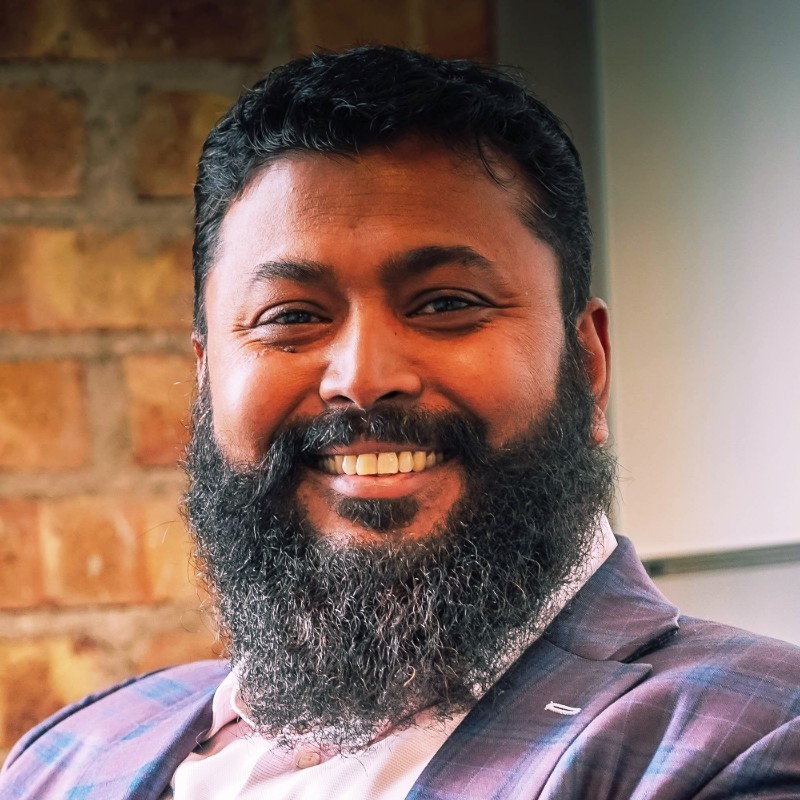
Munzoor Shaikh - Founder & CEO of Long Game Health
Healthcare transformation is easy to talk about and much harder to put into practice.
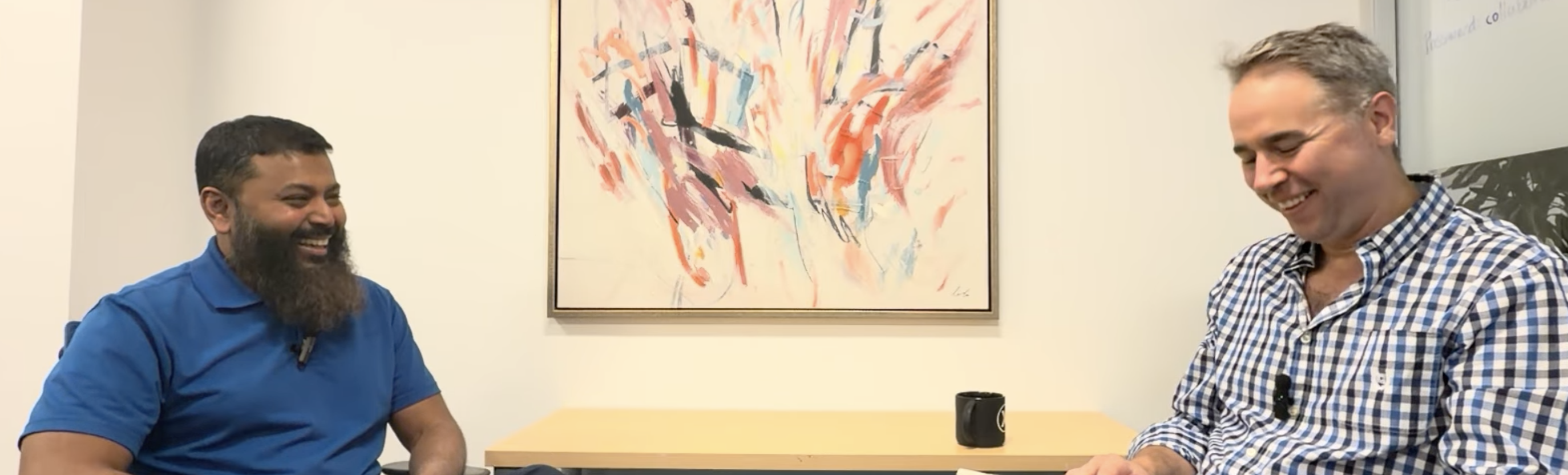
In this episode of Ted Listens, Ted Novak sits down with Munzoor Shaikh, Founder & CEO of Long Game Health, for a conversation about the work of turning ambitious ideas into durable change.
Munzoor shares his perspective on the intersection of strategy, operations, data, and leadership—and why meaningful transformation requires more than a new initiative or a short-term answer. The conversation looks at the long game: creating the clarity, alignment, and follow-through needed to improve performance while keeping people at the center.
They also discuss what it takes to lead through complexity, build trust across stakeholders, and bring practical thinking to systems with no easy answers.
For more on Munzoor and Long Game Health, visit LongGame.com.


"I think I might put a brick into the big castle that is the solution. And if I could do that I would consider a success."
Watch Now
Transcript
You and I have known each other for quite some time. we're tangently right back in our kind of consulting days. Y I always knew you as the tech guy gone healthcare guy.
Yes.
and you know now you have your career has now led to your new
practice that you founded. would love to kind of start there a little bit of the origin story and you know if you're okay with it I like to back into why
healthcare and we've got interesting people solving interesting problems.
Yes. Kind of one of the themes on the podcast. Healthcare has a lot of problems.
so I'm curious kind of how you got into the world into the space and then if you can kind of lead us to problems you're solving now.
Sure. I'll try to summarize. You just tell me the level of detail. Yeah, that's that's that's good. So I'll start with West Burner actually. As you said, you know, large and still very
successful firm, right? I started off at technology integration. There's a lot of opportunities in healthcare. Saw a lot of problems that healthcare organizations had related to technology.
So that's why I made the jump. It felt interesting. interesting enough, what what was happening at the time, you know, Wester has always done well. We
were doing well. I was doing well. You know, we're all doing great, but we were like, where are we doing any good? You
know, and that kind of always got to me like, hey, I'm doing well for myself, but am I doing anything? And I felt like, okay, there's one problem I could
solve. I think I can do this. You know, there's a lot of healthc care stuff.
Ironically, I'm not a doctor. I'm not a clinician. much to my mom's sadness, I guess. But but I I I realized that u yeah we have a lot
of doctors in the family. So I just talked to them about like hey I I'm working with healthcare and you guys do this and what I discovered is there's a
massive gap between what doctors say their experience clinicians doctors and nurses say what their experience is and
what the patients experience is and what the systems that they use provide.
So I was like oh this is interesting. So I felt a sense of purpose. That's why I went into healthcare. And I I still think like healthcare is not just a
problem in the US it's a worldwide problem right and actually later on in the career I'll tell you what I I learned more about that in terms of numbers but I started
off in tech got into healthcare and one of the things west still to this day does really well is M&A right and and M&A has two fronts due diligence and
postc close so for the audience who doesn't know due diligence is before a private equity or somebody is buying a company they'll look at
is it good under the hood that's what we would kind of say Right. And we would Wester was the premier technology due
diligence company at the time. And then we started to add some healthc care perspective to it. And that turned out to be very differentiating. Long story
short, I stopped counting after 200. I did like more than 200 due diligences.
So it just gave me a very unique view into what's happening in the healthcare world. I could look at, oh, they designed it this way. So they're really
trying to solve for this problem, but really this is the other problem that they're not solving for. So I kind of got to see some patterns. One of the patterns was whatever was I was seeing
in the due diligence space two years later that would show up in the literature. So in a way we were like two years ahead which is kind of nice right
because it gave me a very unique perspective on how clinicians work, how administration or insurance companies work and where are the the pitfalls.
So that's kind of what got me into it and I got a very unique view because of the technology and healthcare due diligence. Then I got into the postclo
world and oh my god it was a whole different world of problems. All the due diligence problems like market size and technology differentiator, what's your
secret sauce? What's your competitive advantage? All of those things still applied but now you've got a added dimension of people. And one of the
things I love and this is why I got into consulting in the first I love dealing with people. You know people can be complex, cultures can be complex. Some
people can see that as an impediment. I I always have thought that it's a it's a strength in our you know the country in the culture in the company whatever
have you so then starting to work with people how do I navigate the the seauite in a portfolio company who thinks we
need to be here but the everyday person that runs things totally disagrees and they're not on the same page yeah you know so then I'm trying to work through all of that and trying to use technology
knowledge to say that's great that's the right technical answer wrong people answer and That's where I come in like I'll later on talk about the human
algorithm. I think that's partly what's missing in our you know calculations if you will. I'm using the word algorithm because that's what's famous these days
but but you know the human factor is really really important right. So that's when I started learning that. Then I got into really what I would call more
1 secondpurpose- driven stuff around hospitals and kind of started that practice at Westmin Hospitals at the time were going through digital transformation through COVID and
all that stuff. Value based care is another big thing that's known well known in the healthcare world. In a nutshell that's basically rather than paying
clinicians for services they do pay them for the outcomes they generate. Y this is complicated. It's not easy.
and that's why it was a very interesting field to be in. there's lots of promises that it had. There's also lots of drawbacks that it had and the jury is
still out whether that's the answer for us in the long run as the United States or even as the world.
Yeah. I mean value based anything is is a challenging proposition because it sounds good on surface but you know I I've had value based clients
right in in not so much in building websites but if we're doing digital marketing and that sort of thing and certainly every startup wants a value based relationship right
yes and the challenge in a business setting is you then your livelihood is now dependent on things that are also
outside of your control instead of just in your control. And so with healthare you know for me it's it's it they
have a bad product right or they're managing the product incorrectly doesn't matter how well I do if it doesn't work with people you know as an individual
it's hard enough to regulate your health the right way. if you're that third party being a part of that part of that outcome it's challenging as well and people don't agree on what value is.
There's a diverse opinion on how people perceive value. So that's a problem in contracts. Yeah. And so how do I get paid? How do I pay you based on value
based contracts? So those are challenging things and you really got deep into it. U one of the large hospital systems that I worked with actually did three million lives on
value based care and it was great to work with. It was just complicated and you're riddled with political problems, technology problems, data problems, you
know, operational problems, but they were tackling it and they're I consider them still one of the pioneers in that space. So tech got into s of sense of
purpose with healthcare, did a lot of due diligence, then got into provider and hospital space. Great. I love that.
And one of the things I love is that hospitals always have a mission statement they actually, you know, really talk about and care about. And I I will say this, a lot of people are
mad at hospitals and insurance companies, but every person I've worked with in any of the healthcare industry, I have not run into one person who doesn't actually care about the patient.
I agree.
And they're good people. And I think it's it's honestly that is what I I I'm not a believer in the system yet, but the thing I believe in is the system
still has good people. That's why I believe in the system because it can change. That's the that's how I put myself to sleep. So yeah. No, I mean that's that's I mean
that's fantastic. The I was talking about the other day and it's not it's not in the context of AI and I don't feel like getting into an AI conversation right now. Neither of you
probably, but you know the don't hate the player, hate the game. And and like people use that quote. I'm like, well, maybe you shouldn't play the game, you
1 secondknow. But the reality is is in a lot of different things there's changes happen.
There's systems that are there and it's you can do better being
good within the system sometimes than ignoring it completely because if you ignore it completely then all the good people aren't part of it and it's run by the wrong.
Yes. Right.
Yeah. And disruption I don't know jury's out on that one too. Is that is that the right thing? I think there's certain areas certainly that need disruption. I
mean COVID was an unintended it seems like an unintended disruption, right, for for digital health which has improved access to health and that's good.
Yeah, that doesn't change health. It changes the access to health for some people. So that's so we've maybe chipped away at a
little tiny problem or a little way through a large problem. So, so that's that's kind of where I was at at you know, doing hospital stuff and then
you know I left West Monroe and you know essentially took the hospital stuff and I had a friend who was in the actuarial field and he's actually a very
1 secondfamous actuary his name is Tom Terry and he has Terry Group Terry Health was sort of the brand that I kind of worked with and we thought that you know if I were
take all my clinical operational and even technology experience what if I combined it with actuarial and I always found that intriguing because back to
the numbers thing there's actually numbers that show why we are headed in the direction we're heard. It's not a surprise, right? To actuaries are like, yeah, we've been seeing this for
forever, right? and in fact, the the numbers show the rest of the world is actually kind of headed in the same direction as us. It's not it's not just
us and it's not just our system that's broken. It's a worldwide problem. In fact, I would say it's a worldwide success to some degree. life expectancy
has improved in across many countries and ours you know particularly although sometimes it goes up and down but as
a result we have more older people getting sicker and in a way that's a success story right you know we've afforded to to live life
this long now to have these challenges therefore we have a previously unprecedented problem which is we don't know how to take care of a population
profile that is heavier on the older population than than than the younger so we're we're solving that and the of the world is kind of headed in that
direction. So the the premise of that that partnership was to see whether actuial science and healthcare
operations management consulting can kind of cross-pollinate. We we found that they do well independently but there wasn't a lot of crosspollination
we found. So then you know I end up carving out and we separated the business and and that's what became long game health. The reason we picked the
name long game is because I feel like no one really plays the long game in healthcare. People play the short game.
90 days at most six to nine months out.
People make a three to five year strategy and roadmap. We've been and consulting projects doing that. Yeah.
But no one really does anything beyond six months with that. Yeah.
Right. So what's the point? And now people are actually realizing that. So they make shorter strategy road mapaps and make them more flexible. And there's other way and some people don't even do
it. They're just like we're going to do it on a yearly basis. But I think the long game is like, you know, you could probably relate to it on a personal
level like you got a achy tooth. It's not that bad. Just got a little headache. Take some Advil. I'll be fine.
Yeah. Yeah. Pops up another two weeks later.
Yeah. Just do the same thing. After a while, you go finally gets tremendously painful and you go to the dentist.
You're like, "Oh, you should have come in six months ago. Now you need to do a root canal. Yeah.
So we are always we're almost kind of wired that way individually. I think we're always looking for the short outcome like ah the cost of me driving out to the dentist, making an
appointment, all that, giving the insurance information. I I just don't want to do that. Right. I stick Advil's so much easier. Right. Right.
And it's giving me the short-term gain, but the long term it's actually worse for me than had I spent that time up front. It would have cost me less, would
have been less painful, probably would have kept my tooth, you know. So that's that's a personal life example. there's tons of this in the in the
healthc care space, you know, that that happens. You know, prior authorizations is a good example. I picked that because one of the themes in long game health is
like, you know, if we really thought long term, I have a thought experiment that most thought experiments I think are just theoretical and not useful. But
I think this one I find useful, which is how long do you think it'll take to solve healthcare to make it really awesome?
Are you asking me now? Yeah, asking now.
I I mean I don't even know where to start. I would think you know how long it takes to even land a contract with a
hospital to to go to make change. But I mean you're talking decades. I would imagine decades. So let's just say 100 years.
Okay, we could even say 500, a thousand.
Doesn't the time doesn't matter. Let's just say eons away.
We don't know what that time is. But we do we know what that ideal perfect health care system looks like. Sure.
No, but we can tell aspects of it, right? It's kind of like we can describe pieces of the elephant a little bit.
Like one thing I know is that prior authorization is not a painoint in that thousand-year perfect system, right? Interesting.
Okay, we know that. How do we know that?
We just know that. it's how does it work? We don't know. But we know it's not a problem. Today, prior authorization is a pain point for the
one who does it, the payer, the one who asks for it, the provider, and the one who it's about, the patient. You go to the AMA website, you'll see it. It's all
over the place. It's Everybody's having a terrible experience. Everybody hates it. Yeah.
Well, why do we keep doing it? There's reasons why we keep doing it. Because in the short run, if you don't do it for a year, fiscal year, you know, the one
who's footing the bill, the payer, which could be a self-insured employer, whoever, they there's a lot of abuse and
misuse that happens that would not happen if they didn't have a proper and prior appropriate. Some sometimes
the denials are inappropriate and it causes people harm. That's not what I'm talking about, right?
1 secondYep. So they do that to gain the short term but even within that even within the right things that you can do if you
didn't do the right thing and actually gave the patient some you know treatment in some cases that would actually solve the problem in the long
run the argument why don't we do that then argument against that is somebody if if you and I are a health insurance company and we have a membership and we
say we're going to do all the right things by the members well then we we invest that money here and then the
three years, five years down the road that's going to show up. But that member is gone after 2.2 years. Yep.
So they're not financially incentivized to do that. So then they have to look at the short run, but because of the short run, guess what's happening? Everybody
in the population actually in some areas could be getting sicker. I'm not saying all of it's inappropriate. So the the
example of that is like in a grocery store and we've all experienced. go to the grocery store, you love this grocery store, it's a long line, you know, and there's just not
enough, you know, people to to man the line. So, what do you do? You know what what's we always like to solve the surface level problem. We always treat
the symptoms first. That's like our human thing.
and then the first thing that you'll see is that somebody will oh take a number. Do you remember that back in the days? You take a number.
Other do it at Juel.
Yeah. Right. Other times they would then it was like okay what's the average wait time you see the average wait time or you see a very friendly face coming hey
did you find everything okay now as a customer all those things do make you feel better right it makes you
feel better but does it actually solve your real problem now I just want to buy and move on so if you were to really look at the
root cause different people pay differently some people like to pay in cash some people buy large quantities some people buy small quantities. Some
people buy quantities that take a long time to check because it's a fruit and doesn't have a sticker on it. Right. Yeah.
So, what if I were to break those out and actually kind of design my my payout lanes accordingly? And that's what's kind of led to some of the self-pay and selfch checkckout kind of stuff. Right.
Right. That's a type of customer, type of purchaser. Sometimes I go there, sometimes if I'm buying a lot of stuff, you know, then I'll just go to the the manual line or whatever. Prior
author is the same way. We right now just put everything in prior off. Not everything has to be on there. Some things shouldn't even be prior off, right?
So take those off. Some things should probably be auto approved, right?
Because the insurer would probably be like, "Yeah, this is a waste of like I mean I've heard doctors so many times I'm called into a 4hour meeting to review something that's looking for a
certain DME that dude the patient needs to why do you put why do you need four hours of my time to look at this?" Right? You know, auto approve.
others yes they require medical necessity and contextual you know reviews by actual humans and things like
that so that's kind of like the grocery lines right so I think you so that that to me is like an interesting area that's why pyro is an area that we tend to try
to solve and our kind of guiding post is what makes it what makes the outcome better for the patient so here's what's interesting so your
your perspect your perspect it's great to hear and I love also the metaphor because I think a lot of people can
relate to that and for people that have been dealing with healthcare in some shape or form with fire offs can relate to everything we discussed and to me
that sounds there's probably a a fire or a a coffee chat happening somewhere and two people are complaining about that
right sounds like a hard problem to solve so what is your approach to being able to influence that when you're
working with you know so maybe we can talk a little bit about, you know, sure who some of you don't have to name names, but, you know,
what a client looks like, like the type of people that are that you're engaging with for the services that you do and how you even begin to approach something
like that knowing that it's part of a huge system.
Yeah, that's a very broad and deep question. So, let me let me come back to the prior one. Just go back to the question about long game. So, we named
it that because everybody's playing the short game, which is actually shortch changing us in a way that's not, you know, incentives are we are getting
sicker as a population than we should be and it's costing more and we're more and more frustrated and we're one of the richest nations that just can't get like
we just can't get good service. This is it's sad, right? So long game would be if you play the long game you are probably going to take some short-term
hits but in the long run you will be better and it will you will gain and accumulate competitive intel you know advantage
over things and you'll just do the thing you're better at right you know hospitals are great at taking care of acute care that's what they they're not
great at taking care of primary care right that's that's not their thing so do we need to segment these things out and have them contracted differently I
don't know I think we need to evolve this organically. So that's why we called it the long game health is that and and everything we do is kind of like
all right here's the thing and you know you know this as a consultant somebody will come and say I got a problem with this I need this I know here's a solution and then the first question is what's
that solution going to do for you what business problem is are we really trying to solve for and the answer almost comes down to I just want a shortterm problem
to go away like the headache from the toothache but I'm not really looking at the long term what if I could stop your toothache
in perpetuity if you invested a a little bit now. Right. Right.
And this is going back to like missionoriented people in healthcare.
I always find there's some leader, some you know manager, some frontline person that just gets it.
I I always run into these people and I love running into these people because they just got the wisdom of the world impact, you know, inside one person and they just either haven't had the
platform or the right opportunity and I see as a consultant as an outside organization is to give them that connectivity and platform within their
organization. once you hear them got brilliant ideas and they can you can take them and and do what you will with it. So that's how long game kind of came about.
So right now we primarily serve hospitals and health insurance companies and aspirationally a few employers large
employers that are doing that are self-insured because they're essentially like a payer Yeah. themselves, right?
But they just don't have the payer capabilities and data an analysis capabilities particularly. So they're crossing their fingers.
Yeah. Exactly. So on the on the hospital side there's so long game is like again if you look at a million years a thousand years from now what does that
system look like? We know that the major pain points will be gone. So we just pick the major pain points today and say that's our areas to focus in on. We know
that in our lifetime my lifetime I don't think I'm going to solve any of these problems. I think I might put a brick into the big castle that is the
solution. And if I could do that I would consider a success you know that I put one brick in here you know. Yeah. So, so those those big problems on the provider
side, there's two of them we we've identified. One is a throughput and a length of stay. So, hospitals have something called length of stay that
they measure. How long do you stay at a hospital? Now, some people would think, well, shouldn't isn't long length of stay a good thing? The people are getting all the care. Well, yes and no.
appropriate length of stay is the right answer clinically because sometimes staying at the hospital actually has other sort of safety hazards. There's
hi or hospitalacquired infections that can happen. So the longer you stay, the longer you might have a problem with that or people who have orthopedic
surgery really need to move around a lot and they may not feel you know they may feel a little bit more constricted in the hospital than than doing that at
home. There's a lot of cases where they show that home health is actually better and you know helps you towards better recovery and things like that. So in
some cases staying longer is actually dangerous for the patient. Y not not to unknown to mention it's also we have limited beds now compared to you
know population although the average number of beds per people who need it you know is is really high in the United States and the consolidation
we're seeing as sad as it is it's unfortunately an economic reality that we just don't we have too many beds in a way and a lot of people argue against
that and say nope we we don't have enough beds co proved that a lot of clinicians would argue against it and I think there's valid points on both sides but the point that is is the case.
Whatever beds we have, we need to use them the best. And we don't do that today because we have generally poorer lengths of stay, longer length of stay
than what should be. There's actually published actual data and other, you know, benchmarks around what should be the length of stay given your acuity or
just complexity of your situation. So that's what we're trying to adjust to is say can we do that the right way? There's always going to be exceptions.
Humans should always be human clinicians should always be at the forefront of making those exceptions. I know the data says Ted should be here three days, but
I'm telling you he needs to stay here for seven days. Great. That's what you say as a doctor. We think that's the right call, you know. So that's what we want to create. So length of stay is a
is a big thing. And throughput becomes the other thing which is if length of stay is high then throughput is low.
Just you know math, right? That means that in an area like for example one of our clients was in an area they were a safety net hospital and the only
level one trauma hospital in a in a within a large radius. So their their demand was essentially infinite. Meaning
if people coming in who want an inpatient bed is there's always unmet demand. Well, what happens if my
throughput is not ideal? Then I'm turning people away who need a bed for potentially people who don't need a bed.
So I'm not treating the population correctly. So this is another thing that you know clinicians you know sometimes have to explain to others
other clinicians that you know if you want Ted to say stay because not because he medically needs it not because it's
actually better for him but you know he's he's just likes he just wants to stay here you know then you're actually denying somebody else
that bed that actually might need it more than Ted.
Yeah. So in that case it's not good and and and the data shows that there's a lot of untreated things that go and as a society we end up paying for that
because people go untreated they get more complex and things become more expensive when you don't treat them. Yeah. Right. Like just like the tooth problem.
So that's throughput length of stay. the way we solve that is really mostly through operations. So, I've got really
awesome administrator clinicians who've been CEOs, CFOs, chief medical officer, chief nursing officer, chief operating
officers, chief quality officer, chief information officer, and they have just they're like veterans. They've just they know where all the bodies are buried.
So, they can go in and they're like not like the type of consulting that you and I grew up with. We grew up we go and we create a deck and do some thorough
analysis and you know, in my case, some technology, you know, and do that.
There's they're like, you know, the first day I went, I remember my my nurse, she went and she's just like walking the halls and talking to people.
A month goes by, I'm like, "Where's the deck?" And she goes, "I don't have a deck." I'm like, "Where's the deliverable? We got to have a deliverable, you know." And
she goes, "Well, I don't know. I can make you a deck, but you know, I noticed that this, this, this, and this person when they do this, and I'm like, everything she's saying is kind of gold."
And then next month, I'm like, "Okay, let's write those up." Turns out she's already solved them.
she's already made the connections between the right people and and solved it. So I'm like, "Oh, this is a different type of deliverable. I'm
actually impacting the operations of what it should be." And and we saw the length of stray drop to an appropriate level. It's called O to E observe to
expect it, which you would expect it that number to be one.
So it used to be like 1.3 or something and it was down to like 1, you know, 05 1.01. Explain this to me. This is interesting.
Observe to expected.
Yeah. So observe length stay. Let's say let's use you as an example. For your acuity, you should say three days. All right.
Okay. And the doctors agree that there's no exceptions. In your case, there's nothing special. Yep. Three days sounds right. But for some reason, you're like,
h I like the TV here better. Can we can I just stay another three days? If I let let you stay for six days, now the observed is six.
Okay.
The expected was three. So your observed to expected ratio is two. In the case of the sample size is one. Of course, this is over a large sample and and and there's geometric average and all that.
So, it's a way to measure what actually happened versus what we planned on happening. Correct. Okay. Got it.
Correct. Actual versus expected. Observe versus same thing. Yeah. So, that's how it would happen. And and a lot of places will have that number be inappropriate.
and sometimes it's inappropriate in the other direction too where it's 0.9 and you're releasing people too fast and that's dangerous too. So, so this is a a
a bit of an art and a science where you need to really find the right mixture and do right by the overall population but also do right by each individual
patient and that's really kind of hard to do. You really need good clinicians for that, right? And good operators for that. So that's what we would do in this
throughput case. Should I move on from that? Yeah.
Y next one is same for hospitals but this is the what we call the peroperative space. Okay.
Peroperative means around operations.
and procedures. Operations is just the word. It's procedures like you know GI procedures, colonoscopies, etc. So Perry
means pre, during and after. So there's protocols that you could follow to do so. So if you think about my mom had a, you know, both of her knees, you know,
place total new placement. those require preparation. You need to like is your blood work good? Is your blood
sugar good? Do you have any kind of heart conditions? You get cardiac clearance. There's a list of things that you do over time. What's happened is our
surgery volumes are actually they're growing and more so importantly the complexity of the surgeries are growing. More people have more complex chronic
conditions. Chronic conditions are things like diabetes, congestive heart failure, all these other kind of chronic things. Those things can complicate
surgery. So you have to have people prepped appropriately. In the old days, people just kind of did it informally.
It would just, you know, a nurse would call you maybe, hey, make, hey, don't eat anything tomorrow because you got your surgery. Okay. Right.
All right. Too late. I already had a, you know, chocolate bar or whatever.
Chocolate cake for breakfast. You know, we'll cut you anyway. We'll cut you open.
Yeah. No, they can't. They'll they So, that's actually called case cancellation. When that happens, they have to cancel the cases and then, you know, you have a lot of idle time
that goes away that block time that probably doesn't get used in the O or operating room. So, the perioperative
world is really interesting. Again, our center of interest is always the patient. What's good for the patient?
The patient should get prepared. And when you prepare the patient really well, we think there's you're going to naturally get benefits out of that. You
don't have to like go after your own benefits. Do right by the patient. I remember our old co used to say it's like take care of the customer.
That's your job. Do everything the customer needs. Don't worry about your sales number.
Don't worry about your whatever. Do that and everything's going to be fine. And I always found that to be super true. 100%.
You know, and it felt good. that felt more like hey I'm actually helping people and it's it's the right thing to do right so same thing with patients if you do the right thing by the patient I
believe the hospital will benefit and that's what ends up happening if you actually take care of the patient up front in the pre- op before operation or
before surgery before procedure then they tend to have lesser fewer complications they tend to have fewer readmissions which is also a costly and
and a penalty driven thing for hospitals so the financial thing actually improves and and now there's regul and and the
science around the clinical science around peroperative medicine I'm not a clinician so I have to caveat this my understanding is it's still evolving and
it's not fully known my CMO chief medical officer he is a peroperative expert he could tell you the clinical side of it but there's things that
are still evolving so people don't know so a lot of the surgery or general medicine or all the people that coordinate surgeries they may not know
the nuances so you kind of need to bring this newer and evolving science into their world and create things like
standard operating procedures or, you know, guidelines for when somebody should do a preop screening. There's a screening process you should go through.
Hey, you're high risk, you need to do a preop cleaning, clearing. Talk to a nurse for 30 minutes, 45 minutes, help you get settled. You're low risk, you don't just
show up at the day of surgery, don't eat anything. Sure. You know, like that's that's the way to do preop surgery. The reason perioperative I think is interesting is because again like the
number of surgeries are increasing the complexity is increasing. A lot of downstream cost and outcomes are tied to
these things. I also think that hospitals feel like the surgery stuff is one of their last remaining higher margin items. So they don't want this
business to break and the fundamental forces about we actually have a paper called the five forces driving anesthesia stipen. You
know what does that have to do with perioperative? Well, anesthesia is one of the key things you need in the process. Think about it like a sure
almost like a factory line. Without the anesthesiologist, nothing happens. Right. Right.
And these most anesthesiologists are not employed by the hospital. They're generally part of a outside group that
contracts. So, you have to have them and you but you need to make sure that you have more than what you need slightly.
It's called safety stock. So that you don't have a surgeon that comes in and a patient that comes in, but there's not an anesthesiologist. Interesting.
So that causes you to have safety stock, which means you have to guarantee a revenue to the anesthesiologist, but you may not make up all that revenue. So
you're end up paying them a subsidy or a stipen, which is straight out of your bottom line. So like if this is manufacturing we bought and we're making
chocolate we need cocoa beans and this would be the equivalent of all right we we bought I don't know what they measure cocoa beans in but we
bought enough to make way more than we need or at least more and so then there's there's that question so good we have this safety our factories is going
to run today no matter what but then ultimately there's a part of what can we do with these extra koa beans right so how can we fill that up
and get full utilization And so that's in this case there's not necessarily what can we do with it. You just live with the extra that you it's okay to
have a little bit of that waste and in manufacturing they would actually have things where there's safety stock like you know a warehouse will have safety stock that they know they're not going
to sell but the cost of stock out is higher than the cost of extra stock. So there's a there's an equation that they balance that makes a lot of sense.
Yeah. And there's there's actually Q math to do this you know. so so so that's the perioperative world but to me the biggest thing was you know my mom when
she did her surgery you know she had good doctors and everything but she kind of had to coordinate a lot of things between her primary care and surgeon and all
really it should be and it's confusing she's not a clinician she doesn't know so what we should do is we should have a perioperative expert coordinating things
among all the experts for the patient again make the patient experience better educate the patient better empower the patient one of my favorite quotes by one
of the nurses that actually used to work at West Monroe. she used to say the best thing we can do is educate the patient on how to be a great consumer.
And I love that because you teach them how to take care of themselves. Health education I think is one of the that's another thing a thousand years from now
I think about health education is somehow we've perfected it. I don't know what it is but somehow we've perfected it and people have all the information
they need to take care of themselves and they're motivated to do so. Again, go to it. I don't know. But it's so interesting because largely we
are I mean the human body is a machine, right? Complex machine, but it's been built the same way for a very long time. Yes.
Largely, right? in in the sense of of how we're made and the fact that we are still figuring out
how to maintain what the rules are. Yeah.
Which is very interesting. And obviously, you know, comes into environment, comes into trends, it comes into eating habits, comes into exercise, you know, everything else. But there's
so many distractions. we were talking ahead of time on at the fact that I was losing some weight. I'm like,
you know, you you first you first get something like that and there's, you know, all of a sudden all your feeds start exploding with like weight loss
programs and stuff. I mean, they're there anyway, right? Yes.
and there's all these magic tricks and nothing works and everything else.
Like the math's pretty easy. It's simple math. Calorie ins, calorie out.
Calorie in, calorie outs. Pretty darn easy. But like the educational component was also fascinating to me too that I've learned in this process on things and
the term is health halo, right? and I always, you know, wanted a trophy for the fact that I never really eat potato
chips or anything like that, but I eat a lot of nuts. I'm like, look how healthy this is.
And and then in this process learning that the high calorie value of nuts was like eating, you know, a giant pizza. Mhm.
so anyway, point being, information has been out there for so long, it's often distorted. The fact that we're still working on education is
always just kind of an interesting thing to me.
Yeah. And one experiment I'd invite you and any of your viewers to to also do is I actually did this on myself. So, as a
South Asian you know, ethnic background, I'm prone to diabetes, hypertension, and high cholesterol,
which is exactly what the doctors have been saying for years. Then those numbers keep kind of climbing and I have to manage those. the diabetes one
particularly got worse and bad about four years ago and I was pretty upset and I just did this experiment like you
know I might listen to my news or news feed or podcast feed or whatever. I said let me just add something related to diabetics to this. What happens?
Right. And just as I'm listening I realize so many things like the potato chip example is a good one. I realize so many things that I'm not doing correctly. Right. Yeah.
you know, I didn't have enough fiber in my diet. Fiber actually helps you feel full. Right.
Right. So, you know, whether it's oatmeal or certain types of vegetables, you know, high fiber foods, I do that
and I'm like, I'm not hungry because the math is easy. What's hard is the lifestyle. The lifestyle is hard because I want to consume 5,000 calories when I'm burning a thousand. Right. Right.
Right. Right.
so how do But why? Because I'm constantly hungry. And I I used to feel like I'd wake up in the morning, you know, at night, I'm always hungry. I'm like, and then I started eating fiber.
I'm like, I'm not always hungry anymore. I feel better.
So, I think that's actually a a good indicator is that it's got to feel good.
It's got to feel something that you can sustain. Yeah. Right. So, I'd invite your users to try that. Put one hour a week of just listening to something
related to your health. Just see how it'll change your behavior. Right. So, health education does work.
You know, that's a that's a theme with you in this in this conversation.
also long-term health and everything else. It goes back to the fact I can be a brick in the wall. the I think it's
very interesting because and I'd love to know kind of how this works when you are propositioning a a new client or
maybe they're they're calling you and asking is when people are hiring a service they are looking to typically
it's someone who needs to tell their boss look what I just did because I hired Monzour and his company right look what we happened short-term gain that's
what people are often looking for and we talked a little bit about, you know, insurance same way. You know, if for somebody this person's long term, if
they're only a member for this long, we don't really get the benefit of this.
What happens? but the thing that I keep hearing with you with everything is chipping away in the right direction is kind of the path towards some of these
long-term gains. So, I'm I'm steering this into a business conversation, but when you're approaching clients, how to me that
sounds like a hard sale even though everything that you're saying is hard sale for somebody to actually agree
because are they seeing results instantly or what are some of the indicators that you look for in the work that you're doing?
Yeah, that's a great question. The short answer is we try to balance it out because the long game is not always done at the expense of the short game.
Okay.
You just have to know which of the short game you're playing with the long game in mind. It's it's a judgment factor. Gotcha.
Right. To say, okay, I'm not willing to give this one up for the long game because of XYZ reasons. Sure, that's your call, right? There's no right. I
don't think there's a right answer. I think there's a awareness. I think historically we see people just looking at short-term gains only, right?
versus versus a long-term kind of thinking, you know, and we just want to make them aware of that and then choose. And generally,
we we kind of do have to do the shortterm stuff first, right, to prove that something works. But luckily, and this is I I think I'm just
lucky like most of the clients we run into, they want to do the right thing.
They've not had the opportunity. So, it's almost like if I'm talking to you, I'm like, "Ted, I know you got to show these numbers in the next 90 days or 180
days. I think we could do that. Here's the way I think we do that." In the process, what if we inserted this and that? And and then you're like, I love
that, but can we think about how I can do this? Like, health education is my passion. How do I put that in there?
Like, okay, well, maybe you can't do anything this year. Maybe you put it in the budget for next year or how are you going to help? I mean, one client did that. They said, "I'm gonna put 1% of my budget for health education." Great.
That's that's awesome. Then you've got a little 1% change, right? Yeah.
But to me, the the the the greatest return on investment for me, and you know, our old CEO used to say this is the psychic return, right?
Psychologically, I feel like one, I feel like it put that little 1% the brick, whatever you want to call it. Yeah.
But also, your passion is reignited. And it's it's amazing how often people's own passion and mission goes to sleep at their job.
And I actually find myself my primary job being rein I I'm I'm I don't say that I'm going to bring a great solution. I'm smarter than you there.
I'm going to bring a great solution that you didn't think of. I'm like, "No, man.
You know your business better than I do." Yeah.
My job is to really reignite your passion. Maybe show a few things that I've learned from other best practices and just kind of be your guide and
partner along the way. That's how I see it. It's not like I'm gonna come and we used to say this at Westminer. I really love this is that the philosophy we're not doing it to you. We're doing it with you.
Yeah.
Right. And that's what I love is doing things with you because learning then happens both ways. I learn oh this there's an assumption I didn't challenge
and oh you know Ted's sort of making me think differently on this thing. So So yeah. So, we do the short term often in the beginning a little bit more than we
like to, but eventually kind of get our way into the the long term one.
Yeah, it's really interesting and I and you know, I think that's a universal way of looking at business in in
general, right? like you know even if somebody hires us to do a website I often say like it's so interesting because you're
talking about your business to get there and you're having conversations that these people have always wanted to have and now there's a forum to have it and
then you know in my world there's some sort of website product and then there's marketing and things like that that come out of it and then they get to see that how that impacts ROI. in your world, it sounds like it's changing processes.
It's putting new ways of looking at running the business. and all those things are are very exciting.
curious and I understand I I have to imagine you're in a lot of NDAs with all your worker and so on and so forth. Is there a story that you can tell like
an using a client example and you can leave their name out where you kind of went in they said we've got this problem.
your team went in, your head nurse walked around and solved the problems before the deliver was made. Would just kind of love to
like you know understand how like an engagement looks.
Yeah. Well, I'll just I'll just go on that one because that's kind of relevant and the context has already laid. so the problem for this particular kind
of safety net hospital trauma level one trauma center in the large radius their problem was our our care
management function is broken. We needed to fix it. Okay. Okay. What does that mean? Right. What does it mean it's broken?
And then we started to interview people and we got a lot of qualitative data.
And initially the qualitative data was complaints mostly from physicians and others that well care management isn't really here. they're not doing things.
And and and for for your viewers, the hospital is run by a team of people.
There's doctors, nurses, there's hospitalists who are a certain type of doctors, there's a social worker, there's case manager. They all have
slightly different roles, right? And you know, then we went so we talked to everybody and everybody, yeah, case management sucks. They they're terrible.
Okay. Loud and clear. Heard it. Okay. Yeah.
Not sure what they're bad about, but you you perceive them as bad. Okay. I got you. Then we go talk to case management and they're like yeah we we are doing
everything and we're getting no recognition for it. This is a very common problem very kind of you know bipolar sort of world and then we
started looking at what what is it that they end up doing. So they end up doing a lot of the slack work that people weren't doing that was their sort of job and most importantly there was no
coordination across all and that's where our head nurse kind of came in. She's an operations officer as well. So she just s found a lot of these problems where
they happen. I'm trying to think about a couple of good examples or you know there's some cases where like the the patient is staying longer than they need to and it's creating problems for
the patient. The patient themselves sometimes wants to go home and somebody's afraid to say I don't know what if they have a complication when
they go home. Have you checked medically? Is it you know does doctor agree? If there's reason to think that they're going to have a complication,
fine. Then let's do what we need to do and keep them longer. But if there isn't reason and it's just you're afraid to to let them go, then that's a subjective
thing and we can make a decision as a team. So it was just as simple as saying, let's identify all those patients that we think have a problem, talk about it, and there was
rounding in the morning and then there was a touch point in the evening. They talk about it and they say, "No, I think this patient's ready to go." And then pretty soon, like I said, that second
month, you start seeing the number of discharges before 10:00 a.m. is a is a thing in a hospital. Yes, morning discharges are generally considered a
positive thing. Always there's exceptions in in this way. I have to always caveat this. In clinical science, there's always an exception. Science,
there's always exceptions that, but you know, the number of discharges in the morning started to go up. And what happens now?
Now their length of stay starts to get closer to that O to E of 1.3 to you know it's eventually it was 1.0.
So it was implementing that group conversation that started doing that.
Correct. That was one of probably 30 levers that we kind of pulled together.
So there's one there's checking for preo. They're looking for something called clinical criteria. When somebody's coming into the inpatient
world first thing you should do is take their intake, get their data and then see what does the criteria say. There's published criteria that are
evidence-based. This is a big thing in medicine. Things need to be evidence-based. There needs to be published studies on statistically significant number of people to say this
is a clinical science that we can follow as a guide and we can always deviate from the guide if the individual physician feels differently as they should. Yeah.
So they would look at that criteria. They weren't doing that.
The criteria is inside of the EMR, but they weren't doing that. Why? Because nobody educated them on it. A large part of that was educating both the
physicians and the case managers. this exists inside of your EMR, you need to use this criteria. If you did that, a lot of these problems downstream would
kind of be be solved for you. So, it was like a lot of those little things put pulled together and then as we started the nurse kind of
kept going in start tweaking all these things. Yeah. And over time, you start seeing more patients and more you know, patients that needed the beds. So,
now they're they're the throughput started to increase. So there was actually I think almost 30% or 20%
more patients that they were actually seeing that they weren't seeing before. Interesting.
So those people were were getting getting turned away. Interesting.
You know, so I mean it almost sounds like you know part of part of that process and so the ask the ask is this is broken.
And part one is is you know your engagement starts with let's figure out what that even means,
right? And what it sounds like, which it's interesting, your consulting background really shines here, is you know, talking to the people, right?
You're uncovering areas where the gaps are really the fact that there's different people doing different jobs that don't really understand the other jobs that are happening.
And within those gaps, you're able to find places that kind of connect
those roles through data that's meaningful to another. to to the other. And in this particular case, it sounds like the data was always there, right?
Yeah.
That's like Google Analytics in my world. You know, I can tell you exactly what's happening on this. We've got it all here, but it's, you know,
a complicated complicated application sometimes.
so in that in those types of things, sounds like that's more of like a process change and that sort of thing.
It's a very I I would say actually process we're trained in process in our consulting background. We always use the the acronyms people, process, technology, right?
I learned something else in the healthcare world that I think is similar but but a little bit more useful. and the full name is escaping me, but
Dabedian is the person who kind of came up with this principle. So the Donabedian model says structure, process, and outcome.
Okay, if you have the correct structure that will create the right processes that will eventually create the right
outcomes. So we did a lot of work on structure in this case. So some of the structure for example there was no physician adviser. A physician adviser
oftent times will advise a certain case to a team or sub team or even just another physician on what should I do with this patient. Right.
Yes.
And just having that available. It was almost like Uber demand call. Hey, I want to have a physician adviser. These three are your name physician adviserss.
Call them when you need them. They get calls and and our nurse would actually say this is a good case. let's call the physician adviser and because people
wouldn't do that before, right? And now they're calling and the physician adviser is actually giving them very good, you know, clinical based advice sometimes saying good to discharge something. No, you're
right. We should keep this patient longer. Here's a reason and I would probably monitor these extra things.
So now people are finding value by doing that, right? So that was a structural change that caused the conversations a
process to happen differently and as a result the throughput which is the outcome happened. And I I know the problem that you're resolving there because otherwise you're you've got
you're dealing with someone who's not authorized to make some of these calls.
Yes. While you're waiting for the doctor, you know, to come into the room that's starting to get cold and all that other stuff to then make the official call. So you're basically amplifying
your productivity and your your health care professional spending the right time with the right people by having these other options in play.
Yeah. Exactly. And time is of the essence in healthcare. Doing things timely. Going back to the tooth example, that's a crude example, but took care of
a tooth time ago, then it wouldn't be a problem, but now the time it's too late and now now you got to root canal it or something. So having that physician
advisor be available upon request or within plus or minus one hour, whatever the SLA or service level agreement that we kind of create, those are the structural elements that we create.
Standard operating procedures, escalation procedures, these are parts of the structure that that we would create. So we would So the step one you said case management was broken. Great.
Let's go find out why it's broken. Some of it was just kind of affirming the truth. That's yeah you experienced this frustration. We affirm that your frustration is true.
Sure.
We don't affirm necessarily that case managers are bad people.
Yeah. What's bad is that they don't know their roles. No one's told them their roles. So right we ended up creating a roles and responsibilities.
Another structure item. Right. And then now they know what to do. And then we created education. So here's your new roles. We're going to educate you on
your roles and now you're going to do that. And guess what? Human beings are creatures of habit. You tell them a role, they're not going to do it the first time. You need somebody there to
constantly say, "Hey, this isn't remember that thing we said in class.
This is something where you could try that.
Why don't we just let's give that a try." And you got to say it in a positive affirmative kind of way to people, you know, not like, "Hey, dumb person, you know,
didn't you learn this in class?" No. So our our our operating officer bedside manner, pun intended. bedside manner is really important right on that one. So, so that's then the roles and
responsibilities became a structure and then they started learning that and then the process was continuous education because you know sometimes physicians will come and turn out or sometimes
people will just forget because they haven't had a case in a while similar type. So you know that's those are the types of things. So it was not like that's the other thing I think is a
folly of mine that I grew up with. I'm still working on challenging this this re reflexive behavior. In my mind, everything's a used to be like a math
equation. Y is equal to the function of X. Give me the one lever X. I'm gonna turn it and the one outcome that I care about Y is going to become awesome.
Right.
And that is a way oversimplification of of life. And in healthcare particularly, that's an incorrect model. Correct.
In healthcare, you have multiple inputs X1 through XN and you have multiple outputs Y1 through YN.
Yeah. and you're trying to solve for the correct portfolio. That's why it's a art and a science, you know. So, so a lot of people say, "What's the one thing you
did that you know?" It wasn't one thing, right?
It was 30 things, you know, physician advisor, SOPs, escalation procedures, code 44s, all these little things that
added up to that. So, so that's your that's the example.
That's interesting. Now following the journey of you working with a client. So you affirmed challenges came in
there with solutions provided the training bedside manner helped understand roles everything else. to
your point you know people don't always get here's your new job and then they go do it right. What what happens
next then? So do you typically have check-ins with these with these institutions? are there additional
things that you kind of come in that let's solve this problem next? How how does that all kind of work?
Actually, so this is goes against my maybe traditional a traditional consultants mentality, but one of the success points I consider is like we
came in and it took about a year to do this because it's a lot of changes, right? But once after we left, right, the real test to me started then.
Are they going to continue to keep that o and throughput the way we had gotten them to? And the answer so far is yes, they have. So I consider that a success.
because I worked myself out of a job.
That's what a good consultant I think is supposed to do. Yeah. Right. So yeah, there's check-in points.
There's degradations that sometimes happen and new new needs emerge and things of that nature. So So that's that is true. Or or or sometimes there's
newer opportunities like for example that now case management tying in with peroperative or their pre-operative that
hasn't happened. That's a that's a brand new thing. Yeah. Right. But to me, I think that's one of the long game things I'd like to offer is it will help
you play the long game because you're going to be successful in the long run and you're going to actually get year overyear whatever your value creation
is. You're going to get that value year over year without us.
Right? Rather than us embedding ourselves as necessary, you need to hire us for life. I I never like the term clients for life. It's a has double connotation. Friends for life, yes.
Clients for life, well, did I make myself make them dependent on me? That's I don't think that's success, right?
You know, maybe financial success for me, but it just doesn't feel right, you know? And that's not success for the client, right?
Going back to the principle, do everything right by the client, you'll be fine, you know?
Right. Well, it starts to grading it's against your purpose that you stated, right? Exactly. So if you're just focusing on the one thing and kind of
like milking it, you know, like look at all the other opportunities that you're missing to go and you know start laying more bricks in other places.
Yeah, that's very interesting.
Okay, so you we touched on some of the things that actually we touched we already covered some of this already.
I was going to say we've touched on a lot of things that I think a lot of people understand in terms of you know challenges with pre-auth and and some of that.
1 secondYou can come back to that. Yeah. But as I'm saying that, you know, there's probably some people that haven't thought through some of those complexities. What what are some of the things that are happening in the health
care space that most people aren't talking about right now that is somewhat exciting or something that you are seeing and experiencing?
That's a good question, man. so I'm a little biased because I I live in the healthcare bubble. So everybody's talking about all the healthcare things in the bubble. say there's probably 99
things that to you are old school and and everyone's talking about but but we aren't you know so maybe maybe I'll plant a seed on
one so I've got healthcare clients and actually I have payer clients as well
what a lot of times I hear from practices is how much of their business is influenced the way that insurance will pay out
and if this ends up not being an area that that you get into we we can we don't have to make this part of the
episode but so in terms of how in terms of how insurance pays can sometimes drive how the business needs
to run because it influences who they can hire how they can pay and then how they can service and what the if that is
too specific what I'm really talking about is the role of insurance preparer
versus provider and if there's any big shifts that you're starting to see or any things that we should be talking
about as we're trying to work towards that hundred-year future.
I can give you one that I think is at least tactical. Let me start let me start there and see if it goes a thousand years out. This may not go.
so right now you said reimbursement.
Reimbursement is has always been a pressure. It's never been not a pressure at least in recent history. So, we've always known this and to some degree,
you know, providers are angry. They're like, "Hey, you're cut I provide a good service. You're cutting my reimbursement. That's just makes it hard
for me to take care of people who cannot afford insurance and cannot afford to pay." On the other hand, people who
crunch numbers, the finance types might say, "Hey, you know, the the regular inflation and healthcare inflation,
healthcare inflation always used to be let's see, below the the regular
inflation. Now it's higher, you know. So that means that you know, you you're you're getting you're getting
a a different amount that you did before. So I think Medicare and Medicaid are definitely seeing a suppression and
cut in reimbursement. So that to me what that means is most hospitals providers are going to say where's the money at?
Where's the reimbursement at? It's in commercial which means they're going to overt tax commercial payers. the commercial payers are going to find, you
know, potentially more problems than they saw before, which means the commercial premium payers, just
employees, you and me individually, we would see those premiums go up because now somebody has to subsidize the rest of it because that's how it's always
worked whether correct I'm not saying I'm not making an ideological statement.
It's just the way that the market has always worked. Somebody is subsidizing another part of the market, you know. So that I think is so
commercial plans or this is one of the reasons like employer health plans are interesting to me is I don't know if they see that pressure coming. They
definitely feel the premium pressure because the complaint for the last two years at least if not longer has been my year-over-year premiums when I hear
when I have the my check-in with my broker in November is 10 to 15% higher.
I can't afford these prices. Yeah. Yeah, you know there's a there's a somebody I know who's u you know got a foreign company headquartered in a foreign
country and they are saying hey what's this one light item for all of our US people this is like really growing like
crazy which one is it what's this like health care premiums why oh why do you do this we don't do this in our country like yeah we do that
in our country like can you just get rid of it like no that's how we attract talent and and so so it's like it's doesn't compete for them that
you know what what happens. So I think we're going to start seeing a lot more pressure on that on the commercial side of things. Yeah. What does that mean and how are you going to whenever people try
to control it that's what the short-term behavior comes in and you control it and you cut expenses make people unhappy and people just get sicker just they don't
get what they need right so that's not the long-term solution but I know I'm pretty sure that's going to be the first thing that people are going
to go to. You know I I think if you can actually create the culture of health which is hard again somebody as an employer would say my employee average
employee doesn't stick around for 30 years so right why would I why would I invest in that you know so I have a point of view that I think we're we're
actually going to speak on at a natural conference I think the topic is going to be something like if you're a small
company think this is to all HR executives if you're a small company and you feel like you have to compete on benefits with Google or somebody large. You can't do that.
So, but you now you can now you can out compete big ones because they provide the breath of benefits. You're going to provide the depth of care and benefits.
So, something tailored to your population that's going to make your population feel like they're getting a better deal. So, I think that's a new talent attractor. Yeah.
For certain employers. We'll see how that plays out. I don't know. You know, it's interesting because that that you just described us and you know, back
in the day when Google was, you know, stealing all this, you were picking the same talent pool, right? You know, we're like, well, maybe we should get
video game machines, too. You know, like it's like that that kind of stuff and then and then you and then you learn that's all about keeping people at work and it's actually, you know, all all the enrima, you know,
that that are being offered is almost the same strategy as, you know, unlimited vacation, right? Yes. Same thing. but you know, one of the
things that we always hear every time, you know, with our fellow who handles putting our health plan plans together and everything else like that,
we always get everyone else went up a ton, you guys went up less a little, you know, and we've been fortunate some years you guys actually went down.
and so I could definitely speak to the the benefit of having it customized to, you know, the team that you're managing. Yeah.
interesting. Well, cool. two kind of other questions. So, you know, interesting thing about your career
span. you know, I just want to go back to 200 something M&As. This is all getting exposure to the ways that other
businesses are working and, I've been in that seat as well. You start seeing patterns and you start seeing
unique situations that are, you know, kind of fun and interesting stories that might influence your next client that you're talking to.
1 seconduh because you now you understand symptoms you can look for on some of the unique situations. with the exposure you've had in healthcare, what is I ask
two questions in a row. something that you're seeing time and time again
and then I would love a story of something that that has been wildly unique.
Yeah. great questions and trying to see how to summarize it in in short time. I think time and time again we saw
this at Westwind. we used to Westwind used to call it business consultants and deep technologists. Okay.
Both at at once. Yeah.
Right. Because there was a silo between the business folks and the technology folks. Yeah.
That silo remains I think in the marketplace. It's not been bridged very well.
And in fact with AI now there's all these tech companies popping up. They're great technologically. They don't solve a business problem a lot of times. Right.
Right. That's the challenge or they solve for time versus money versus profit versus revenue versus you know it's unclear sometimes what they do.
Yeah.
So I think that that gap is there. But I think the time and time again one is generally I would say silos. Okay.
Payers providers. They don't talk to each other very well. Prior authorization takes so many transactions back and forth before you get to even a
decent human. Like you look at the end you're like dude I could have said this and I as a human noncl clinician could read this and give you an answer in five minutes. Yeah.
Why is it taking you guys like days and sometimes weeks to get to this? Right. So that silo.
You need to get them doing the morning huddles. Yes. Exact. Well, it's a challenge.
Those two worlds are, you know, there's an arms race between those two worlds in terms of AI, right?
And stuff like that. But but those silos are there. And even within a hospital, we found that acute care, ambulatory care, which is more like
primary care stuff like those are there silos. Silos remain. And I would say a large part of probably my whole life, my
brick, a big part of my brick if not the whole thing would be try to bridge some of these silos. Yeah.
1 secondRight. Because the silo break and that's what we did in that example with the nurse, right? It's just bridging the silos can actually solve a lot of problems.
So that for some reason we're just built to be siloed, I guess.
And yeah, you know, it's not like the population in general hasn't taken on this say why don't we just close all the silo.
They're just not doing that or incentivized to silo in many in many career structures and job structures and things like that.
Right. Exactly. There there's not exactly the structure the structure going back to structure process outcome somehow the structure isn't there for them to want to do that. So so we try to
change the structure as much as we can but the silos always remain.
I think I was actually thinking about one of the things I'm and and everything I'm telling you is something I don't know. I'm honestly I'm not even sure I
can articulate, but I feel this and I don't know if you feel this, but like I feel like the old rules of business that you and I grew up with, they're just no
longer true. I woke up one day and I just felt like everything you know, every expertise you gain gone to the wind, dude. It's it just doesn't apply.
There's a new world. You can feel it, but you can't articulate it. But it's important for you to start learning the new rules. And I was like, what are the new rules?
And I'm like I don't know what they are.
But one of them I mean it comes to customer like we talk about customer loyalty was a thing back in 90s with you know United Airlines and all that stuff
right and then in our time right it was customer experience. It's still that like there's still patient experience is like a big thing. It's a chief patient
experience officer. There's companies like Presci that are built to do patient experience and these are all good. These are good things. I I I feel like we're
we're already past that world and we haven't caught up to ourselves yet. Yeah.
And I think it's something around customer trust. Yes. I see it's just it viscerally connects. Right. Right. I can't articulate anything beyond that.
How do you measure trust? How do you build it? What do you do now? What does it predict? I I don't know.
But I do know as a human it's important to have trust. Yeah.
And we don't our c consumers generally don't trust who they buy from.
And that's not a good thing. I don't think it's good for society. I don't think it's good for the customer. I don't think it's good for the business.
I don't know how to solve it this this pie in the sky stuff, but I think that is one of the shifting rules that I feel like I need to learn quickly.
Yeah.
And and and adapt to. So that's something that's new. I also think the second one is also something I think people already have articulated, but
it's at a new level. I think all buying of any kind, product, services, online, offline, cash, non-cash, there's some
sort of social buying factor that we haven't all completely figured out yet, right? And I always thought about this
like, you know, I am influenced most by the people that are like the 10 12 people that are closest to me.
Sure. Why wouldn't like if I if it's my health, like let's say it's the the loss weight loss or diabetes management or whatever, why wouldn't I have those
people be part of a virtual community that watches what I do, tells me what I'm doing wrong? You know, my kids do that sometimes, like, oh yeah, dad,
you're not supposed to drink that, you know, that that sweet stuff. Yeah.
You know, why wouldn't I, if I turn that volume up 12 times, would I drink one less, you know, orange juice or
whatever? Probably. And it' probably be good for me. So can we make social cohesion and almost we've become a little tribal I think now because of the
you know media social media and all that kind but can that be used for good? I don't know.
Yeah but there's social stuff there you know.
Well it's interesting you you mentioned trust and I add credibility is the other the other piece of that. in
terms of any sort of consumerf facing product healthcare is the same sort of thing. and you say you don't have the solution for it. You do because you you've been doing it and part of that is
education right? So, you talked about in the context of putting that in place so that people start doing the job
better, but it's education that's not just training how to do a job. It's education on how to think.
And and when you insert education into something, people are typically getting something out of it, right? They're learning. They're and if
it's aligned with their sense of purpose, they love it. if it doesn't, they can go find a new job where they do,
you know. but I in terms of building trust and credibility because we see this a lot in marketing same sort of thing is everyone's becoming their own
doctor everyone's becoming their own marketer everyone's becoming their own financial adviser and AI is the
popular thing to talk about but people have been doing this since the internet existed right doing their own research and forming their own conclusions they feel good when they feel like they were
part of the problem or part of solving their own problems there's always a part of a population that would say all right who The answer is let me let me
let me get Mur in here right but everyone feels that they are and what you start seeing in a lot of that is
that's the opportunity by the way if you are the one providing the education is ultimately feeding the information that they are getting right and a credible
ource that is a long-term borrow to borrow your perspective that is a long-term way to start building customer
trust credibility etc. I believe it to be through education, right? and so, you know, when we work with a lot of
clients, it's about what, you know, a lot of times I ask a question, they'll tell me about what they do and everything else. I'll say, "Who cares?"
You know, and it sounds like a, you know, rude thing to say, right?
But that's the core of that is at the answer. If you if you understand what people do care about, right? and why
they care about the thing that you're offering. That is the path I believe to building trust and credibility. Is that
I think so. I I think that is absolutely necessary but possibly insufficient in the sense that because I kind of went through this process myself. Yeah. I got
the right social networks. I got all the right friends that are doctors and I'm going to become my own doctor. Yeah.
And there's a danger in that because I'm not a Right. Yeah, because I might feel good that I'm taking charge of my health, but I may be making the wrong decision. So, what I like to say is I'm my own quarterback.
And my doctor is my doctor. So, I use my doctor as a consultant and he's we never talked about this, but he's just wired that way. He's like, "What
questions do you got?" And I always come in with good questions and he he always makes me ask more questions. That's my indicator. If he asks me if he tells me all the right answers, go home, just do
this. Okay, I'm it's okay, but I'm not satisfied. But when he says, have you thought about this? And I'm like, oh, I never thought about that.
So, he's an adviser clinical. He's a clinical expert. I am not a clinical expert. So, I think we do need to give expertise where it belongs.
Trust and credibility, but not be completely abdicated like my doctor said this, I'm not going to think about it. I'm I'm just going to blindly follow what he or she said.
Totally agree.
That's not the right answer either. So, I think I'm my own quarterback.
I use my social channels. I know that particular uncle, you know, he's a PhD in something else. Yeah.
So, he's his clinical advice is eh, you know, I'm not I can't take that. Or this particular person, I found their advice to always match up with my doctors. I
can be the judge of the quarterback and where to pass the ball.
Y versus I think me doing all the decision making.
I love it. So and I I think that's I think that's I think that's very important and it ultim ultimately goes
back to where does the expertise reside. Yes.
okay so you know kind of kind of wrapping up here the we touched on a lot of super interesting things.
the question I have is you know in terms of you the average person who is being processed by this system. I just made
that sound archaic but you know people that are that are interacting with with healthcare which is all of us. Yeah.
What what is kind of the top of mind? So the perspective the fact that you're in all of these topics all the time. What
is one thing that you think is going to start hitting consumers in terms of how they're looking at health care or selecting insurance or what what's like
a big trend that you think might be coming? But I hate to say that people are going to AI for a lot of answers right now. I think that's both good and bad. There's good stories about that
where people have been able to overturn certain u you know pre-o cases. I had a classic case of an uncle from years ago who clearly had prostate cancer clearly
needed a scan and they denied it. and I know how they denied it because they hired another delegatory firm that does
these types of very narrow, you know, denials and cancer and stuff like that.
And then later on, you know, luckily he could just afford it, so he went and did it and stuff like that. I have another case where a younger below 45 year age
friend of mine, she went for colonoscopy and they didn't want to pay for it because she wasn't of the right age.
Then she had cancer and she got a surgery and it was it was going to be catastrophic. So she caught it at the right time. She went back and said, "Now, would you pay for it?" No. Wow.
I'm like, "Have some humanity, man." Yeah.
Yeah. your numbers might be right but your human your human algorithm your human calculation is totally wrong right so I think that that that sort of
happens a lot where you know you need to kind of pay attention to that so people will use AI to to get repeal letters and appeal letters and and actually get it
overturned that's a success story other times people will misdiagnose things that's the danger like most of my clinician friends are worried that
people will you know they used to be term called Dr. Google patient comes in and they know everything and the doctor feels useless. That's not a good
dynamic. I think I think the patient should come in informed saying and the goal I think of the patient doctor interaction should be I want to ask the right and the best
questions and I want to get a very good engagement with my doctor that actually becomes an educational session in and of itself if you do it that way
and the doctor's actually educating you and how to do it because they are the clinical expert. I do want to say that it matters who the expert is. You can't
just ignore the expert. You can't take the word and just blindly follow it, but you got to kind of do. So that's that's where I think is it's kind of a new
area. I think price transparency is claiming to be that thing, the new thing. I haven't seen it yet.
I haven't seen it play out in the lives of the consumer. But I think the information that the people are getting about their own health and tailoring things, looking for symptoms, etc. If
you know how to use AI, then you're probably okay. But I'd always say always check it out with your doctor.
Don't just take what AI tells you is dangerous. Yeah. Right.
So, so that's I think one of the newer things. Awesome. Awesome.
Well, I mean, this is cool. I mean, I I will say, you know, one of the things it's awesome to hear about the type of work you're doing. It's definitely an exciting space. So, I can and it
definitely lives a sense of purpose. One of my big takeaways I think is interesting is you know the brick
statement is really sitting with me because well you know a lot of us you we're all consumers of media and stuff like that you see someone do some big
amazing thing and you sit back what's the big amazing thing I can do right and then you feel like you're not if if you're not on that path what's the point
of what's going on and I think a huge takeaway here is understanding that in order to move the big things forward it's about
contributing to that and helping people see that path forward. and and that it's going to be something that is
worked on maybe a lifetime career, right? and the idea of the work that you are doing will contribute to a
result later that you might not benefit from. Whether you're an insurer that figured out how to service a population better for members that are going to be
with someone else by the time they get it, you made the investment or you're running a business that's putting things in place for hospitals that are then
going to see it as as a long-term piece or just an individual and any job you're doing or parenting and all this stuff. I think it's I think it's very cool for
people that are seeking purpose in life to have an acknowledgment that the work you're doing is going to
contribute to the benefits later. And that's kind of what it's all about. Yeah. On on everything.
Yeah. And I think just to maybe kind of underscore that a little bit. I think when I I used to think this and I still sometimes have to watch myself when I
think this like I'm going to do this one great thing that's gonna really be awesome. All I'm doing is just feeding my ego. And ironically, when we feed our
ego, whether it's with fantasy or even some semi-real things, we go unnourished in our soul. And it's almost by becoming
humble and by being nobody that we actually become a person. Yeah.
You know, and a somebody. And then ironically, that's highly nourishing.
And I think that we do have to think beyond our lifetime. Otherwise, I mean, why are we here, right? I mean, we naturally think about it with our kids.
We got to think about it with their kids and their kids, their kids. Like, if you really think about it, you can't not think about all of humanity after, you
know, our time. And I think if you thought about it that way, like what's the right health care solution for our great great great great great grandchildren, right?
If we can answer that, we probably solve what our problems are right now. Yeah.
Because we just think about it differently. That's amazing.
That's the whole essence of the long game. So, I love it. Yeah.
Well, Monzour, I appreciate you taking the time out of your day.
Yeah, thanks. This is awesome to talk through this. I think you've improved my long game just in conversation. Same here. I've learned a lot.
Yeah, it's awesome. And congrats on your success on that. That's not an easy business to get into. You had a lot of trust and credibility to be able to get into those types of conversations with
folks and talking down my ego. Yes, absolutely. Awesome. Well, cool. Thanks so much. Okay. Thanks, man.


.png)


